
 Eseinosa
Originally posted in Medium.
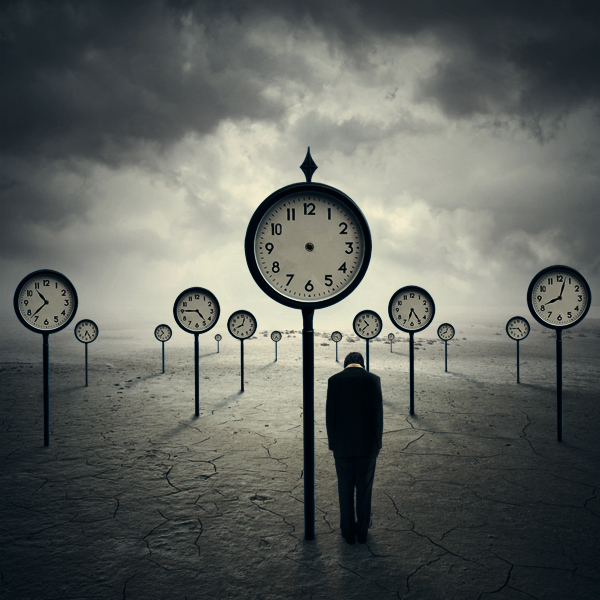
Today we put reading duration, tagged on an article. Today, reading is no longer a freedom of interpretation or imagination. I know that it is up to us, on how fast we want to read, but by putting the time tag on an article, somehow gives rule that supposedly you finish reading this after a certain amount of time.
Well, I guess that’s how the world today supposed to be — there’s nothing wrong with that, but I think we ought to think about it to grasp some kind of deeper understanding. Time is money, time should not be wasted, you should be on time, watch out for deadlines, time is on your side.
Today, time control us. We made the thing called watch that we were supposed to watch but ended up watching us instead, controlling our every move and action. If we fight it, we will be left behind by society. Time is a train of change, and we are supposed to run for it.
Einstein said that time is relative, but we who live in super-modern society today know that it isn’t true. Time is not relative. Time is absolute and it is always political: who ever control time control the world. Is this too hard to comprehend? Let me explain more about this.
There is an anecdote between an Englishman and a Muslim Sumatran Malay in the 19th century. The Englishman looked at his watch and said, “Oh, my. It’s almost dinner time. I’ve got to go.”
His muslim friend said, “Why must you do something after looking at that thing?”
“It’s a clock. See… it shows you the time.”
“Who made it?” asked the Muslim.
“A watchmaker made it.”
“Well,” said the Muslim, “I pity you my friend. Your life is determined by something made by human being.”
“But human didn’t made time. We just made watch to measure it. Time is God given.”
Then suddenly there is the sound of Adzan from nearby mosque.
“Now,” said the muslim, “it’s time for my Maghreb prayer. We muslim measure the time by the movement of the sun and the moon — we marked it with prayers. That, my friend is the largest clock in the world, and the real God-given time. As-salam-alaikum.”
With that they went separate ways.
Time is measured differently in many parts of the world. Today, our time is determined by the winner of the world war: the West. With that kind of measurement, we can navigate the Earth and synchronized our life with one another in different parts of the planet (or the universe if we count the astronauts). But the measurement can be very different from one culture to another. Some culture measure time by looking at the moon, some others the sun, some others the stars and some others by the natural movement of animal herds, or the process of weather.
In Indonesia, once a year there will always be an argument between Muslims to decide when the Eid Al-Fitr will be held. Some muslims use the sun calendar, others using the moon calendar. This is the year 2016, but for muslims its 1437 Hijriah (or 1437 years since the prophet Muhammad pilgrimage in 622 CE). For the Javanese, it is the year 1949 (or 1949 years since the first Javanese Muslim Kingdom of Mataram established). They have different ways in measuring time, thus different ways of life.
Sociologist like John Urry discusses the different time understanding between the industrialist/capitalist society and agricultural/peasant society. The biggest difference can be seen from the definition between work and leisure. For industrial society, work and leisure is determined by the corporations/office where people work. There are seasons for everything such as holiday seasons, shopping seasons, even marriage seasons. And nine to five has become a routine. Even Seven-Eleven franchise was first made based on this structure.
Whereas in peasant/agricultural society, work and leisure could be one inseparable action. Farmers only tending their crop for several hours a day, and the rest of the day they do something else. In Indonesia, some of them active in local politics, some of them (like peasants of mount Merapi, central Java) made ritual arts, some of them made indie music (like in west Java) and some of them having business like graphic/web design (again, in Central Java). There is no work or leisure, there is only life and enjoying life. Tending crops is no work, making arts is no leisure. Both are called living.
Some people are free of time. This is what Anthropologist Victor Turner called the ‘liminal’. They are people who are in jail, or in a phase of initiation where he/she is trapped between two social status. Without status/freedom in society, we will be free of time, nothing bind us to the reality of structural hierarchy. If society condemn you as crazy, you are also free of time. Prison could be the biggest freedom for the mind. And this freedom can be the most painful of all. That’s why the prisoners of San Quentin Facility cried when they watched Samuel Beckett’s Waiting for Godot. They realized that they are disconnected from time, thus they can only hope without certainty.
Well, I can write more but it would waste your time and mine. After all, if you read this, we probably living in the same time-space structure, where there is a timer of how much time you spent in reading this article. So, without further ado, let’s just enjoy the time left for us by this hierarchy. I have to cook dinner since my body is also a clock who’s alarm has been going on for several minutes now.
Adieu!



 Esei Nosa