
 Eseinosa
For a long time, I struggled to define what I do. Am I a filmmaker? A journalist? An educator? A producer? A self-abusive project manager who somehow ended up doing all of the above?
The truth is, I build things—stories, communities, ecosystems, and sometimes, existential crises in the minds of my students. My work sits at the intersection of film production, journalism, and education, not because I’m indecisive, but because storytelling, at its core, is about understanding people, systems, and power structures. And you can’t do that from just one perspective.
So, I write, I direct, I teach, I produce. And somehow, I keep finding myself in the middle of things that grow bigger than I ever planned.
Between Film and Journalism: The Chaos That Keeps Me Going
I started in film. I liked the idea of creating something visually beautiful and narratively haunting. But early on, I realized I wasn’t interested in just making films—I wanted to dig deeper into stories that disrupt, unsettle, and rewire the way people think. That’s how I ended up in journalism and documentary filmmaking, where the challenge isn’t just crafting a story, but fighting for its survival in a world that is full of misinformation and selective memory.
Right now, I’m a Senior Digital Content Producer at BenarNews, Washington DC, working on digital journalism projects that blend investigative reporting, visual storytelling, and narrative filmmaking. It’s an industry where deadlines are violent, the stakes are high, and the job is, quite literally, to question everything. It keeps me stressed but sharp. It keeps me struggling and critical. And it reminds me that storytelling, when done right, is an act of defiance.
But journalism has limits. It informs, but it doesn’t always build. Which is why I created MondiBlanc Film Workshop—because if I wanted to see real change in the film industry, I had to stop waiting for it and start engineering the infrastructure myself.
MondiBlanc: The Accidental Revolution
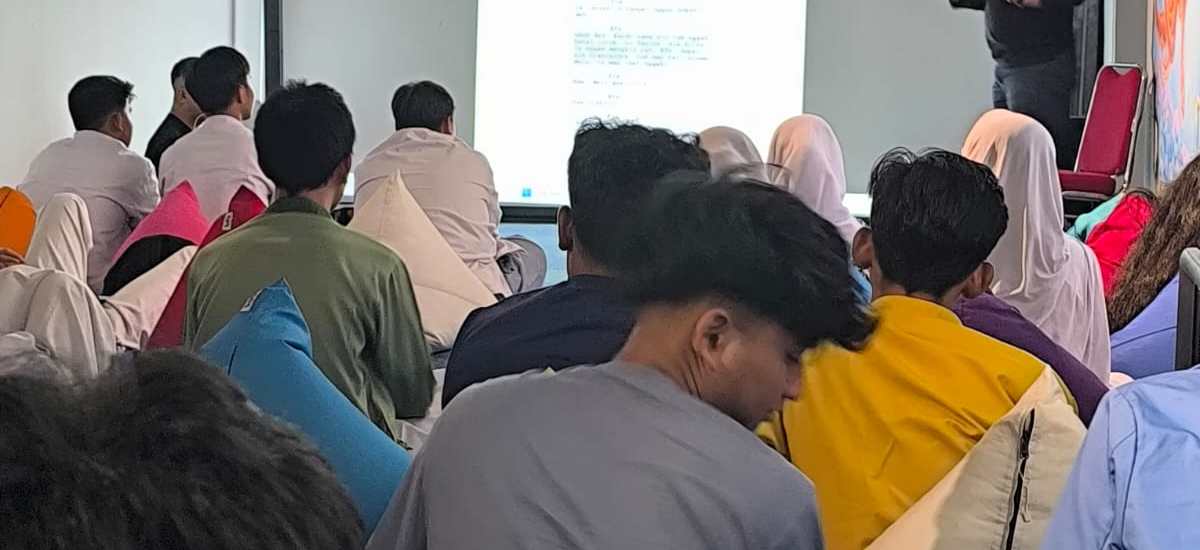
MondiBlanc started as a simple idea: teach filmmaking in a way that actually prepares people for the industry, not just for theoretical debates about “auteurship.” What I didn’t expect was for it to grow into one of Indonesia’s most inclusive and community-driven film education platforms, training over 1,200 future filmmakers, actors, producers, and directors online, and hundreds of offline students in less than 10 years.
Along the way, G20 ICONIC (2022) and UNESCO’s “Backstage” (2021) recognized MondiBlanc’s work in accessible and sustainable film education—which is great for credibility, but more importantly, it proved something I’ve always believed:
Good filmmakers don’t come from expensive film schools. They come from strong ideas, sharp execution, and communities that actually give a damn.
So that’s what MondiBlanc became: a place where people learn by doing, fail fast, fail forward, and emerge better than before. And if they survive my teaching style? They’ll survive the industry just fine.
Filmmaking as a Weapon (and Sometimes a Mirror)
Some films entertain. Some disrupt. The best ones do both.
One of my most notable projects, Xabi: A Phantasmagoric Adventure, was a surrealist dive into mental illness in Indonesia, a subject people would rather ignore or romanticize. The film won the Jury Prize at The International NGO Film Festival 2022, proving that audiences do engage with difficult stories—if you tell them in ways that make it impossible to look away.
Beyond this, I’ve produced and edited award-winning short films and investigative documentaries, collaborating with organizations like Outpost New York, Hivos, LBHM, and the World Bank to craft stories that challenge power, provoke thought, and occasionally, make people very uncomfortable.
Because the job of a filmmaker—at least the kind worth paying attention to—isn’t to play it safe. It’s to poke, prod, and create something that lingers in people’s minds long after the credits roll.
The Future: An Industry That Works for More Than Just the Privileged Few
Right now, my focus is on expanding MondiBlanc into something bigger than just a workshop. The goal is to engineer an ecosystem where independent filmmakers can thrive without begging for scraps from big studios and broken funding systems.
That means:
– Building real industry connections, not just LinkedIn flexes.
– Teaching filmmakers how to navigate the business side, so they stop getting exploited.
– Creating a sustainable network of talent, because the best projects come from collaboration, not isolation.
I’m done waiting for the industry to change. It won’t. So we’ll build something better.
What I Actually Believe (And What I’ll Never Apologize For)
I believe that working and learning are inseparable—because if you’re not constantly questioning, evolving, and making peace with the fact that you know nothing, you’re probably becoming irrelevant.
I believe that there are no bad ideas—only lazy executions. The difference between a good film and an unwatchable one isn’t budget; it’s who had the patience to refine the raw idea into something sharp, urgent, and necessary.
I believe the film industry is overdue for a full-system reboot, and if no one else wants to press the reset button, I’ll do it myself.
And above all, I believe that good storytelling is an act of war against mediocrity, silence, and comfortable narratives.
So yeah. I build things. I teach. I create. And I keep learning.
If you’re a filmmaker, writer, or creator who gives a damn, let’s connect. Because the best stories?
They’re the ones we create together.



 Esei Nosa